You have probably noticed how much a face changes once the eyes are lightly brought forward. Long, thick lashes with a good curl can do a lot: the look becomes deeper, more expressive, more alive. Not everyone is born with lashes like that, and this is where a specialist in extending, shaping and caring for lashes comes in.
Who a lash artist actually is
The word comes from English: lash, plus make. A lash artist is a beauty specialist whose work is eyelash extensions. A good one does not just glue lashes on. They approach every client individually and take several things into account at once: the anatomy of the eye, the shape of the face, the condition of the natural lashes, and the client's habits, for example whether they wear glasses or contact lenses.
The same volume looks completely different on different people. With properly chosen lashes you can also hide small features of the face, such as a hooded eyelid.
The everyday duties are wider than the set itself. The artist consults the client, chooses the materials, prepares for the procedure, does the extensions, removes and refills them, gives aftercare recommendations and keeps working records. They need to know the anatomy of the eyelid, different extension techniques, materials and adhesives, how to build proportions, and the rules of sanitation and hygiene.
What the work looks like during one set
In this job every detail matters. Before starting, the artist always talks through what the client wants, explains the possible effects of the procedure and picks the shape and curl. Sometimes a client comes in for a "doll look" and leaves with something much more natural.
The choice of lashes is large. They come in different thicknesses, from ultra-thin to dense. The thinnest are ideal for volume work, so the lids are not weighed down; thicker ones are used for a natural effect. There is the curl, from a soft natural C to a doll-like D, and the extreme L and M curls that lift the look and suit a hooded lid or straight-growing natural lashes. Length is chosen at the client's request, from natural to ultra-long. Clients who book eyelash extensions rarely see any of this, but the artist makes these choices every time.
Preparation is a very important stage. It directly affects the result and the safety of the whole procedure. The primer is a degreasing product that gets the lashes ready for the adhesive.
The most painstaking stage is the extension itself, one lash at a time. The work can take from an hour and a half to three hours and needs full concentration the whole time.
Pros and cons of the profession
The profession has many advantages, but it has downsides too. On the plus side: a flexible schedule, the option to work for yourself, a fast visible result and a creative process. A finished set is an effect clients like, and the work needs less space than, for example, a manicure station.
On the minus side: strain on the back and the eyes, contact with chemical fumes, large spending on equipment, regular spending on further training and high competition. It takes patience and very fine motor control. Allergic reactions to the materials are a risk. And you have to keep following trends in how the eye area is styled.
Beauty newcomers often compare lashes with the neighboring trades before they choose. Roughly, the start looks like this:
| Profession | Training to start | Materials outlay | Main difficulty |
|---|---|---|---|
| Lash artist | 1 to 3 days | Medium | Patience, very fine motor control |
| Brow artist | 1 to 3 days | Minimal | Very high competition |
| Nail technician | 3 days to 2 weeks | Medium | Strain on the back and eyes |
| Makeup artist | 5 days to several weeks | The highest | Seasonal, event-driven work |
There is no universal answer as to which profession is "better." It all depends on your personal preferences, your budget and how ready you are to learn.
Who the work suits
The profession suits creative people who like making others beautiful and can handle monotonous work that needs long concentration. Good eyesight and steady hands help. The qualities that matter: perseverance and stamina, patience, neatness, well-developed fine motor skills, good taste and a sense of beauty, attention to small objects, and the ability to talk to people.
The last point is not a small one. Often a client comes not only for the lashes but also for the conversation, and the artist becomes "one of their own" for that person.
For someone thinking about a career change, the schedule is usually the main question. Many people start by combining lashes with another job. The convenience is in the flexible hours: you can see clients in the evening or on weekends. If you find that you like the work, you can always take on more clients later.
Learning lashes as an adult is mostly about the hands and the habit of concentration, not about age. Practice matters more than theory in this profession.
Where to learn and what a course gives
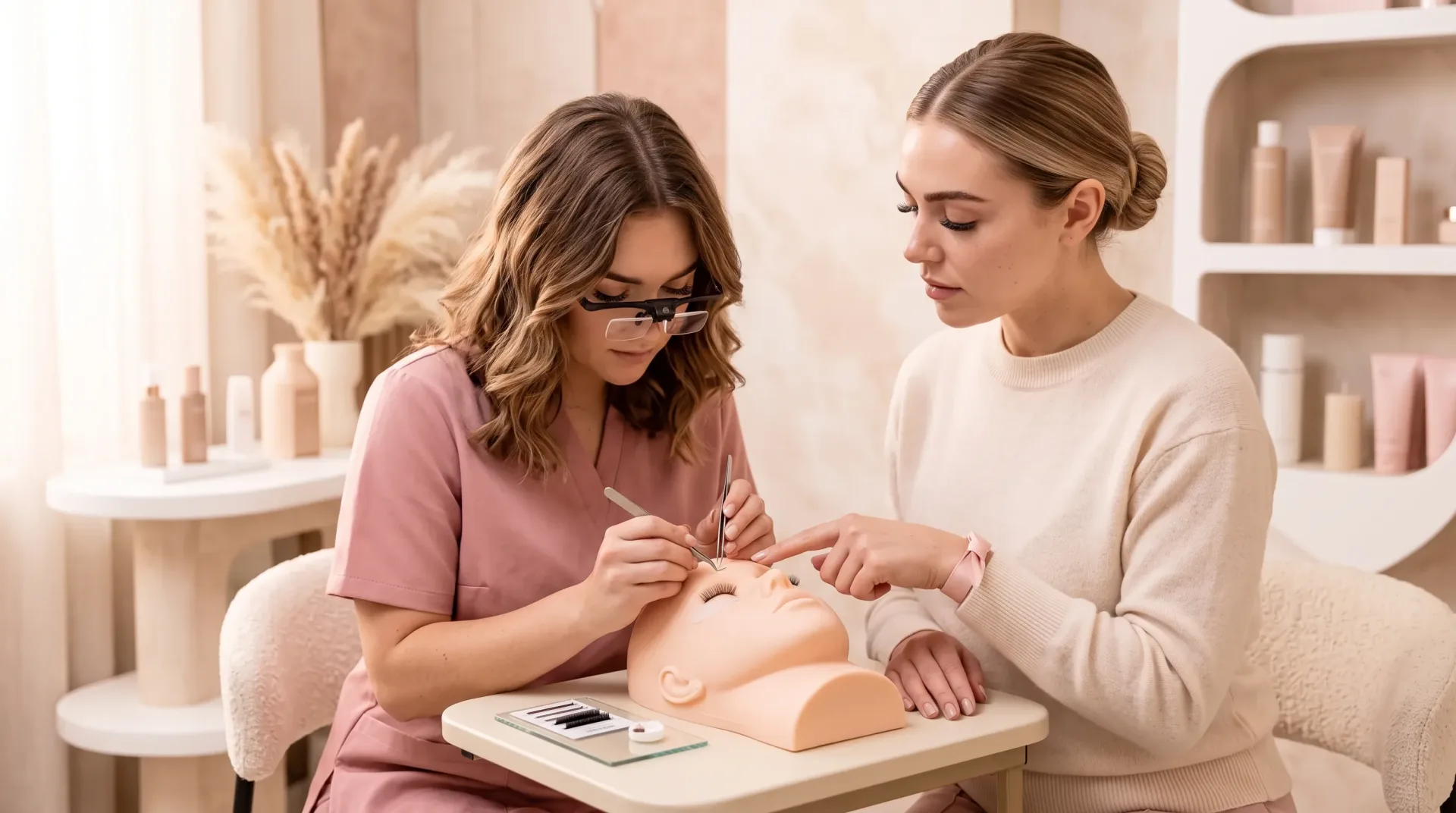
Without training there is no way into this profession, because it is about the health of the eyes. The trade can be learned in a beauty program or on specialized courses from schools and beauty studios. On a course you study the theory, work on models and make your first pieces of work for a portfolio.
At the Eye Decor Lash Academy in Cranford, training is one-on-one, in a real salon environment, and is taught by the salon owner, who has 10 years of international experience. The curriculum covers classic and volume, lash mapping (a map and style for every eye shape), isolation and retention (the fundamentals that separate a 2-week set from a 4-week one), and sanitation and safety. Beginners are welcome. Students bring nothing: the kit, tools, manual and practice products are included.
One day or two
The One-Day Class is $850. It runs 8 hours with a 30-minute lunch break and is meant for beginners: full theory, sanitation and hygiene protocols, choosing looks for facial features, the best brands and where to order them, mannequin practice, practice on 1 live model, classic basics, a starter kit, a training manual and a certificate of completion.
The Two-Day Intensive is $1,300. It adds volume basics, practice on 2 additional live models, more one-on-one guidance and extra focus on isolation, retention and speed, with the same starter kit, manual and certificate. The studio recommends it because of the extra live-model practice.
A mannequin builds the hand, but only a real eye shows how the work goes. That is why the studio points career changers to the two-day format.
In both formats the order is the same: theory and a demo; mannequin practice, where you build your hand on isolation, placement and fans until it feels natural; a full set on live models with the instructor beside you, correcting in real time; and at the end a certificate, a starter kit, a manual and a plan for getting your first clients.
After the course: practice
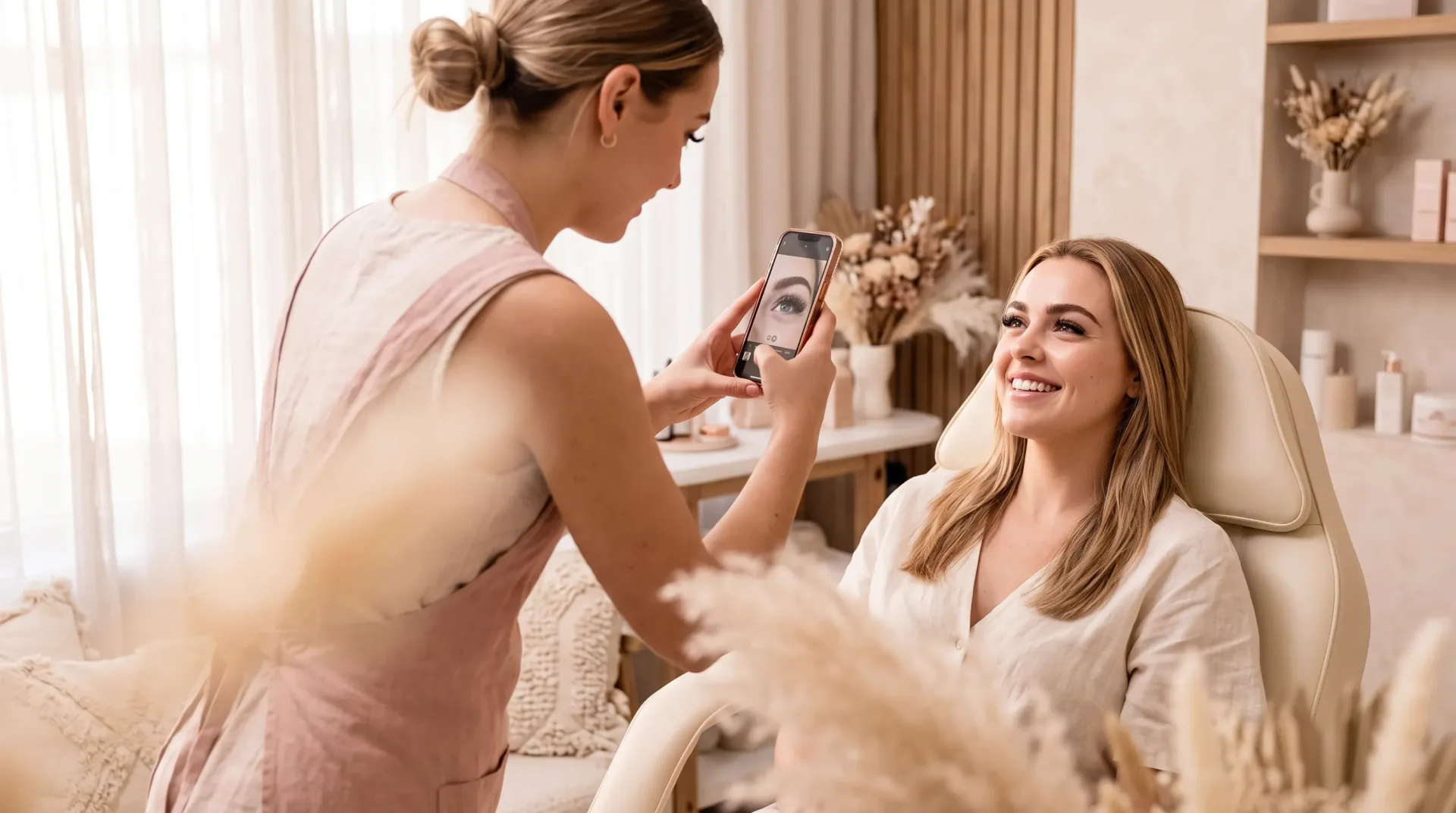
After training, the most important stage begins: practice. You need to build up your hand and collect a portfolio. It is recommended to offer the service to friends for free or for the cost of materials and to photograph every set.
To start working you need quite a lot of expensive equipment:
- an anatomical lash bed for the client;
- a shadowless ring light for correct lighting;
- a saddle chair to take the load off the lower back;
- a strong air purifier for hygiene;
- a dry-heat cabinet or an autoclave to sterilize metal tweezers;
- respirators with carbon filters against adhesive fumes;
- consumables for the lash work itself.
Costs can be cut by renting a spot in a beauty salon. After that you can take an internship at a salon or look for clients through social media.
Do
- Practice on friends and photograph every set
- Keep tweezers sterilized after every client
- Protect yourself from adhesive fumes
- Keep learning new techniques
Do not
- Rush the preparation stage
- Use heavy fans on weak natural lashes
- Skip the consultation
- Expect your first income to be steady
Questions do not end with the certificate. After the course the studio stays in touch for questions, retention troubleshooting and product advice. For students coming from Garwood, the Cranford studio is about six minutes up South Ave.
To keep growing, you can take on related techniques, including lash and brow lamination and tinting.
Techniques and trends
A lash artist is always learning something new. Without that, there is no success in this profession. Clients most often come for classic extensions, since a natural look is at the top of fashion right now; for 2D and 3D, since volume is still in demand; and for Hollywood volume, where the artist forms a micro-fan by hand from several very thin artificial lashes and places it on one natural lash.
Popular effects at the moment are the "wet" effect, where lashes look as if just washed; "spikes," lashes like in anime; and natural maps that imitate natural growth.
New technologies keep appearing as well. With LED extensions the adhesive is cured under a UV lamp, so neither the client nor the artist has to breathe fumes for long. Colored lashes are used, both natural shades of brown and red to match the hair and blue, green or burgundy. Decorative elements are added too, rhinestones for example. The demand for individual looks and for full lash and brow care keeps growing.
If the beauty field is close to you, you like working with your hands and you are ready to keep learning, this profession has every chance of becoming your life's work.