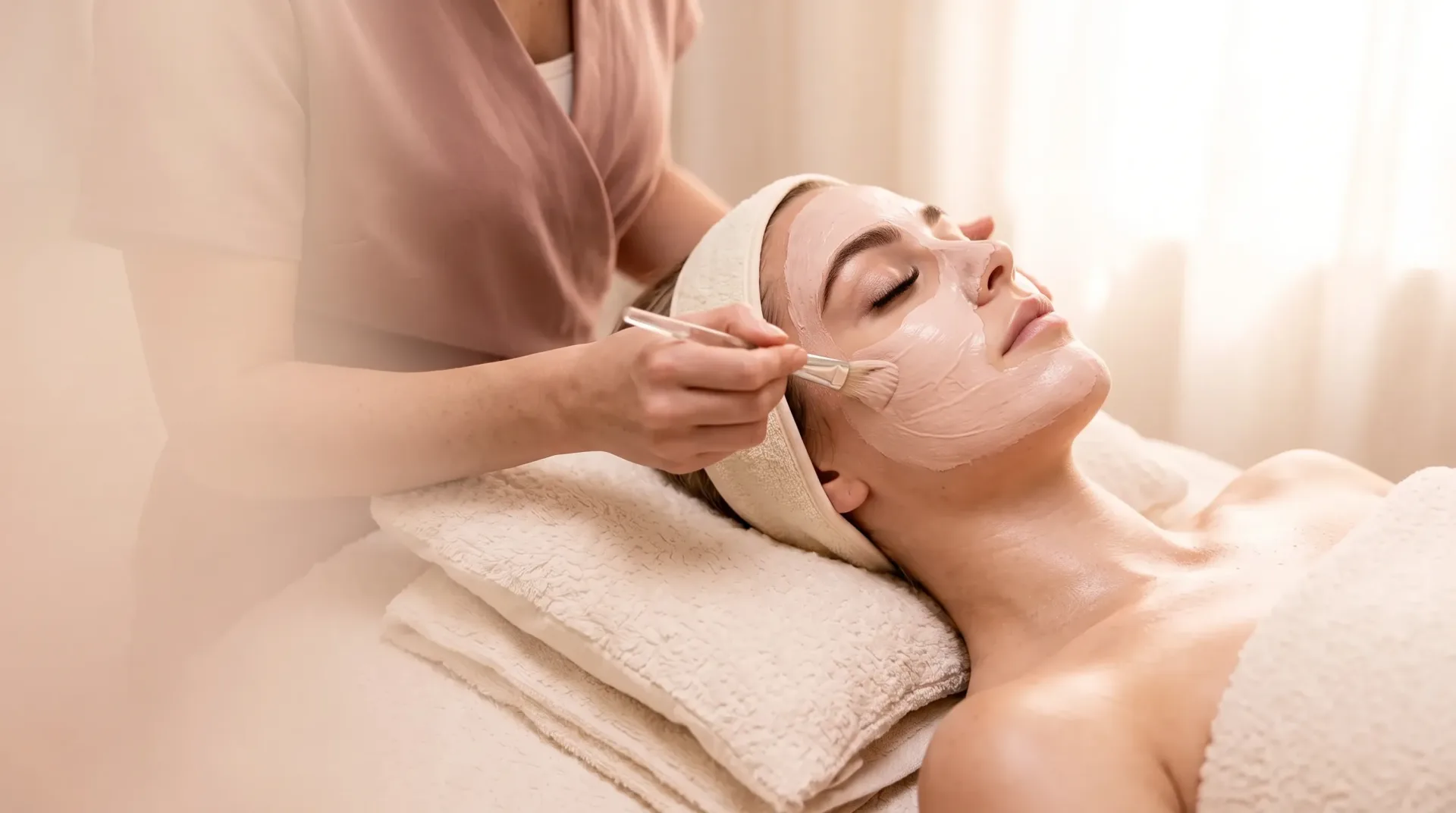
Every person is different, and so is everyone's skin. Regular cleansing is needed to free the pores of extra sebum and dead cells, because they keep the skin from breathing and make the complexion dull. But which facial is right for you depends first on what kind of skin you have, and only then on the procedure itself.
Start with your skin type
There are several ways to classify skin, but the most common one, and the most convenient for a specialist, is by how oily the skin is.
Normal skin has a balanced level of moisture and oil. It looks smooth and even, without extra shine or flaking, and the pores are almost invisible. It rarely suffers from dryness or oiliness and tolerates different products well.
Dry skin lacks both moisture and sebum. It is thin and sensitive, can feel rough to the touch, and tends to flake and redden. The pores are small. This skin needs special care with moisturizing products. Oily skin is the opposite: the glands produce too much sebum, the skin shines, the pores are enlarged, and it is prone to breakouts, clogged pores and blackheads. It needs cleansing and mattifying, and products that keep the oil glands in check.
Combination skin has features of both. The T-zone (forehead, nose, chin) is oily and shiny, with enlarged pores, while the cheeks are usually dry and sensitive. Each area of the face needs its own approach. Sensitive skin can be of any type, but it reacts to many outside irritants — cosmetics, sun, cold, wind — with redness, itching or flaking. It needs gentle care and protection.
How the skin is read
Skin type can change with age, with the season, with hormonal shifts and other factors. The classification by oiliness does not always show every nuance, and some people have a mixed type with one part dominating. So the type has to be checked, not guessed.
First comes a visual check: shine, enlarged pores, flaking, redness, any imperfections. Then the specialist touches the skin. Dry skin feels rough, oily skin is shiny and slippery, normal skin is smooth and soft. A simple oil test is to wipe the face with a cotton pad soaked in clean water: if the pad stays clean, the skin is normal; if there are traces of oil on it, the skin is oily; if the pad sticks to the face, the skin is dry.
The last part is a conversation. The specialist asks about your usual skin problems, how the skin feels after products, and about your lifestyle — food, sleep, stress. Not everyone has a clearly defined type, so sometimes several methods are combined to get a more accurate picture. At our Cranford studio every facial starts with this kind of quick skin reading, and the treatment is then adjusted to how the skin responds. For clients from Garwood, the studio is about six minutes away up South Ave.
Types of facials and who they suit
The recommendations follow the type. For normal skin, the aim is to keep the balance and prevent problems. For dry skin, the key point is deep hydration and nourishment. Oily skin needs the oil glands regulated, a matte finish and fewer inflammations. Combination skin needs different care for different zones of the face. Sensitive skin needs gentle products and no potential irritants.
Masks, exfoliation and peels are the extra step, used for specific concerns. Below are the types of facials on the studio menu and the skin each one is meant for; the full descriptions are on the facials page.
| Facial | What it does | Time | Price |
|---|---|---|---|
| Basic facial | Cleanses pores, exfoliates dead skin, customised to your concerns | 1 h 15 min | $115 |
| Exfoliating clear skin facial | Gentle exfoliation, soothing and nourishing for oily, congested skin | 1 h 30 min | $130 |
| Harmony facial | Soothing, revitalising, restores the skin's hydration balance | 1 h 30 min | $125 |
| Honey enzyme facial | Gentle exfoliating and hydrating | 1 h 30 min | $125 |
| Fire and ice facial | Rapidly resurfaces for a smooth, refreshed complexion | 1 h 30 min | $145 |
| Foaming enzyme treatment facial | Papaya-pineapple enzymes with clinical glycolic acid to renew the skin | 1 h 30 min | $145 |
| Custom facial | Built around your skin | 1 h 30 min | $160 |
So a facial for oily skin is usually one that cleanses and exfoliates gently — the Exfoliating clear skin facial was made for oily, congested skin. Dry and dehydrated skin goes better with the Harmony or Honey enzyme facial. If you are not sure, the Basic facial is customised during the visit. The Eye bright treatment, a $30, 15-minute add-on for fine lines and dark circles, can be added to any of them.
What an enzyme facial is
The base of the procedure is enzymes. These are ferments that break the bonds between proteins and so remove dead cells from the surface. The mix exfoliates but does not damage the protective barrier of the skin. The exact composition of the "cocktail" is chosen by the specialist according to the request and the state of the skin.
There are three kinds of enzymes — plant, animal and bacterial. Plant ones include papain from papaya and bromelain from pineapple. Each kind has its own task in improving the quality of the skin.
Among the enzyme facial benefits, the main ones: it is very gentle, there is no discomfort while the product is on the skin, and changes are visible after a few procedures. It works for different skin types, including oily skin, and can be done in any season, even in summer. Compared with acid peels, its action is softer. The downsides: one session alone gives little, it works as a series, and it will not deal with deep wrinkles.
When to wait
Read the list below carefully. If one or more points apply to you, it is better to postpone the procedure and choose another one after talking to the specialist:
- pregnancy;
- an acute phase of a skin condition, or damaged and irritated skin;
- individual intolerance to the ingredients;
- a viral illness or a raised temperature;
- a fresh tan (if you were on the beach or in a tanning bed less than two weeks ago).
No special preparation is needed, just a few rules. Do not use retinol products for three to five days before the procedure. Do not tan for two weeks before. For five to seven days before, skip scrubs and anything else that injures the skin.
The procedure is not aggressive, but exfoliation still happens. Afterwards there may be redness, a light burning or tingling — this is how the skin reacts to the ingredients. With Fire and Ice and the Foaming enzyme facial, a light flush can stay for a few hours. Basic, Harmony and Honey have no downtime. Extractions are optional, and you set the comfort level.
After the facial: care at home
There is no long recovery. Care stays basic for your skin type, but for the first five to seven days pay attention to two points. Gentle cleansing: do not put the skin under extra stress, give up scrubs, home peels and washes with harsh, aggressive ingredients. A lot of hydration: use masks and products with hyaluronic acid to restore the hydrolipid layer faster.
The procedure is not very traumatic, but a few simple rules keep the skin calm and the result longer.
Do
- Use mild cleansers with a gentle formula.
- Put on SPF every morning after an enzyme or peel protocol.
- Use nourishing and moisturizing products to restore the balance faster.
Do not
- Wear makeup for 4-6 hours after the facial — a light tinted SPF is fine.
- Use scrubs or other harsh procedures for three to five days.
- Sunbathe in the days right after the session.
How often to come back
It all depends on the type and state of the skin, and only the specialist can set the exact number of visits. For maintenance, a facial every 4-6 weeks is the usual rhythm.
Home care and professional procedures are connected. At home: morning and evening care, masks once or twice a week, the right cleanser for your type. Sunscreen is needed every day, even when it is cloudy. Enough fruit, vegetables and water, enough sleep and less stress also matter.
If you notice negative changes — redness, flaking, itching — stop the product and see a dermatologist. Results of proper care do not appear at once; patience and regular care are needed.
Oily skin goes toward gentle exfoliation, dry skin toward hydration. When the type is unclear, a customised Basic facial is the simplest start.

