Sooner or later every set of extensions has to come off. Usually that happens when you want a break or a different look, or the set has grown out. Lash artists treat removal at home as a last resort. The risk of hurting the natural lashes, the eyelids and the eye itself is high, and it is easy to make things worse than they were. Below is what is worth knowing before you decide how to remove eyelash extensions, what the home methods can and cannot do, and when it is time to go to a doctor and not to a mirror.
Why you never pull or pick
The glue used for lash extensions usually contains cyanoacrylate. Only special solvents dissolve it, and those solvents are what removers are made of. While the glue holds, the extension and the natural lash are one piece. If you pull on the extension, the natural lash comes out with it, from the root.
This is the main danger. Without preparation you can tear out not only the artificial lashes but your own. If the glue has not dissolved, do not tear the lashes off and do not tug at them. Even an experienced lash artist cannot fix the result afterwards: the lash has to grow back on its own schedule.
Picking is the same thing done slowly. Rubbing the eyes, twisting a clump between the fingers, peeling off a lash that is half loose - each of these pulls on the follicle. With dense sets the load is bigger, because several fine extensions sit on one natural lash. If you are not sure what kind of set you are wearing, our guide comparing the main lash styles explains the difference.
It also helps to know what is normal. A few natural lashes shed every day, and when they go, they take their extensions with them. Finding a few lashes on the pillow is not a sign that something is wrong and not a reason to start pulling the rest.
How a professional removal goes
Many people ask: can you get eyelash extensions removed without getting a new set? Yes. Removal is a separate service and can be done on its own. Lash artists consider it a professional job first of all. The artist applies the remover in a precise spot and in a thin layer, while the client keeps the eye closed. Doing this to yourself, with one eye shut, is hard.
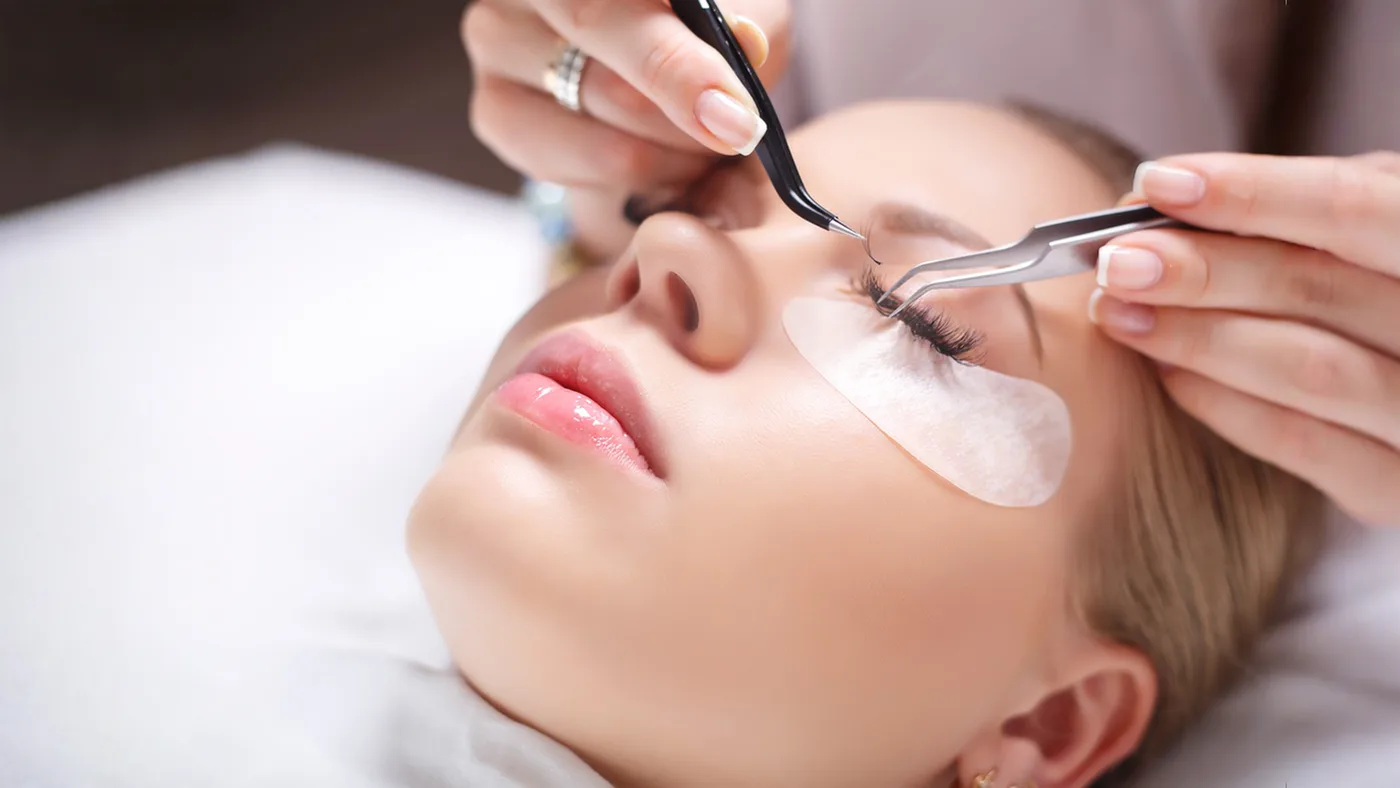
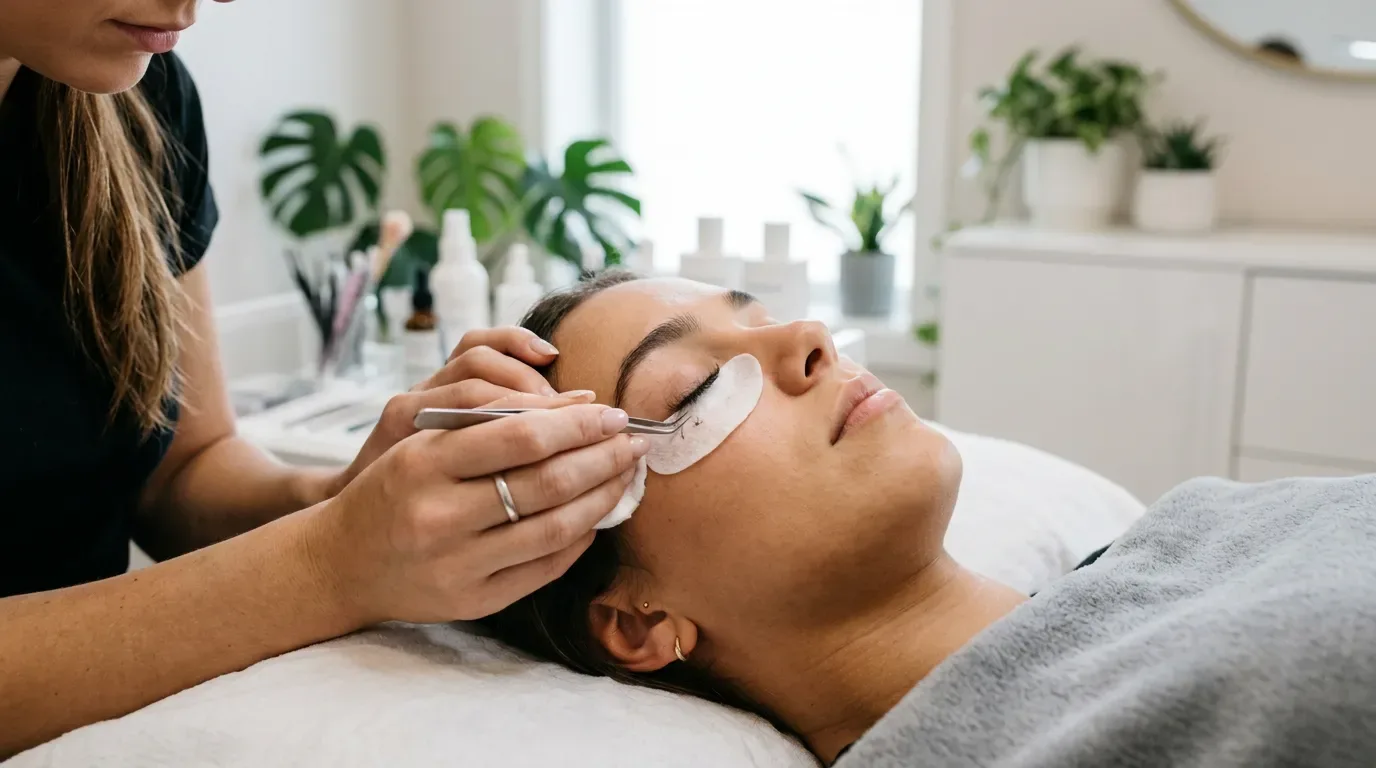
Lash artists use a professional remover, applied in a thin layer at the base while the eye stays closed. In general terms, eyelash extension removal at a studio looks like this:
At our studio a professional removal costs $40, takes about 30 minutes and can be booked any time - you do not need to wait for a refill date. You can see the full list of lash services at the studio, and if you are coming from the next town over, the page for clients in Union has the details.
Removal is also needed sooner in some cases: an allergic reaction, discomfort from the lashes themselves, or before eye treatment. Extensions are also taken off when they have grown out a lot, get in the way, twist, or simply look untidy. Before a lash lift, permanent makeup along the lash line and any surgery on the eyes or eyelids, they have to come off too.
Letting a set grow out
There is a quieter option that needs no remover at all - leave the set alone. Natural lashes shed and are replaced all the time, and every lash that falls takes its extension with it. Over a few weeks the set thins out on its own.
The catch is the look in between. A grown-out set is uneven: some lashes are long, some are gone, some extensions sit far from the lid and start to twist. Twisted and tangled extensions are themselves one of the reasons artists recommend removal. While a set is growing out, it still needs gentle cleansing, and it is still not to be rubbed or picked.
Removers belong in a trained artist's kit; our article on what goes in a lash starter kit explains what each item is for. A spoolie for brushing the remaining lashes is useful here; tweezers are not.
Oil and steam at home: honest limits
Search for how to remove eyelash extensions at home and most articles will suggest oil - olive, castor, coconut - or steam. Lash artists say plainly that removing lashes with oils and creams is largely a myth. Without a remover, the lashes cannot be taken off without damaging them or pulling them out.
Oil does have some effect. Oil near the lash line loosens the glue, but slowly. If the lashes have already started to come away, it can weaken the bond a little more. It cannot replace a professional product. So the answer to how to remove eyelash extensions with coconut oil is: you can speed up the shedding of lashes that are already loose, and that is all. The problem is the eyes. While you open and close them one by one, the oil will almost certainly get into the eyes and irritate them.
Steaming over a bowl of hot water takes a long time, and there is no guarantee the glue will soften and the lashes will come off. Lash artists do not recommend it as a main method.
| Method | What it can do | Risk to the eyes |
|---|---|---|
| Oil | Slowly loosens glue on lashes that are already coming away | Gets into the eye and irritates it |
| Steam | No guarantee the glue softens at all | Heat close to the face, a long time sitting over hot water |
| Debonder | Aggressive liquid, hard to control on yourself | Can damage the skin and the eyes and burn natural lashes |
| Professional removal | Remover applied in a thin layer at the base only | The lowest: the eye stays closed and protected the whole time |
Removing extensions at home is risky for anyone, and some cases make it riskier still. Many artists name these cases: sensitive eyes, watery eyes, a twitching eyelid, poor close-up vision, a fresh set, a heavy volume set, or a large number of extensions still in place. In any of these, removing eyelash extensions without remover or with one, alone at a mirror, is a bad idea.
If remover gets into the eye, rinse it right away with plenty of clean water and see an eye doctor. This is one more reason the job is done with the eye closed and by someone else.
What to do after removal
After removal the artist looks at the natural lashes and judges their state. If they are weakened, the artist may suggest a break until they get stronger. If they are in good condition, a new set can often go on right away, with length, curl and thickness picked to suit them.
Why do lashes weaken at all? Two things are usually named: the glue, and the extra weight of the artificial lashes. With frequent, back-to-back sets, one's own lashes can become thin, break and fall out. Regular breaks between sets are often advised; ask your lash artist how long yours should be. Lash length is set by genetics and is hard to change, but the condition of the lashes can be improved.
Do
- Let the artist look at your natural lashes before booking a new set.
- Take a pause between sets if the lashes look thin.
- Use a conditioning lash serum or balm during the break, if you like.
- Keep cleansing the lash line gently.
Don't
- Rub the eyes or pick at leftover glue.
- Book set after set without a break.
- Try to treat redness or irritation yourself.
- Pull at a lash that seems stuck.
Lash artists also suggest using the time without extensions well: a conditioning lash serum is the usual advice. Caring for a fresh set is a different subject - for that, see the complete aftercare bible.
When to see a doctor
Extensions come with real risks. Poor hygiene can lead to infection - blepharitis, conjunctivitis, keratitis. Careless work can damage one's own lashes and make them fall out. The most common problems are an allergy to the glue components and worse dry eye.
When the work is done badly or with poor materials, the list gets longer: styes caused by injury to the eye; acute, allergic and chronic conjunctivitis; scratches on the cornea from lashes that were glued wrong; an allergic reaction to the glue.
Go to an ophthalmologist if you notice redness of the eyelid skin or of the eye itself, itching, watering, pain or sensitivity to light. Doctors are clear on one more point: do not treat conjunctivitis yourself and do not remove the extensions yourself in this situation. With any unpleasant sensation in the eyes, see the doctor first and, if needed, have the lashes removed. The American Academy of Ophthalmology has a short page on eyelash extension facts and safety that is worth reading. If you have questions that are not medical, you can reach the studio through the contact page.
Do not pull, pick or steam. Oil only helps lashes that are already coming loose. A professional removal is the safe way off, and any pain, redness or change in vision is a reason to see a doctor, not to keep trying at home.
Choosing the person who works on your eyes matters as much as the method. Look at how a studio works before you book - you can read more about the studio and its team.