Years of plucking, a failed tattoo, genetics, chronic illness - all of this often leads to brows that are thin and falling out. The problem has to be handled from several sides at once, with simple steps done regularly. Below is how to grow out eyebrows, how long it takes, and what to do with your face in the meantime.
How long brows take to grow back
The speed of brow growth is different for everyone; it depends on your own physiology. The average figure is a tiny fraction of an inch a day. This means that even under the best conditions you cannot grow your brows back after plucking in a day or a week.
Growing out full brows can take anywhere from several weeks to several months. Keep in mind that the process is individual and depends on many factors: your general health, diet, hormonal balance, and whether the hair follicles have been damaged.
There are a few reasons brows grow poorly. Some people are genetically predisposed to thin, sparse brows. Psychological strain affects the whole body, brows included. Lack of sleep and constant tiredness belong on the same list.
So the honest answer to "how long does it take for eyebrows to grow back" is: you will not see it in days. You need patience and regularity, and those are the main things.
The awkward weeks, month by month
Anyone who has ever removed hair on the body knows the pattern. Usually by the second or third day a stiff, prickly stubble shows up in the treated spot. The face is no exception. Be ready for the regrowing hairs to look not very pretty for the first week and a half or two - growing out eyebrows without looking bad for a while is mostly about makeup, not tweezers.
If you do not like your current brow shape, forget about correcting it for at least 2-3 weeks. The hairs on the bridge of the nose can be removed during this time. In this period your natural shape starts to show.
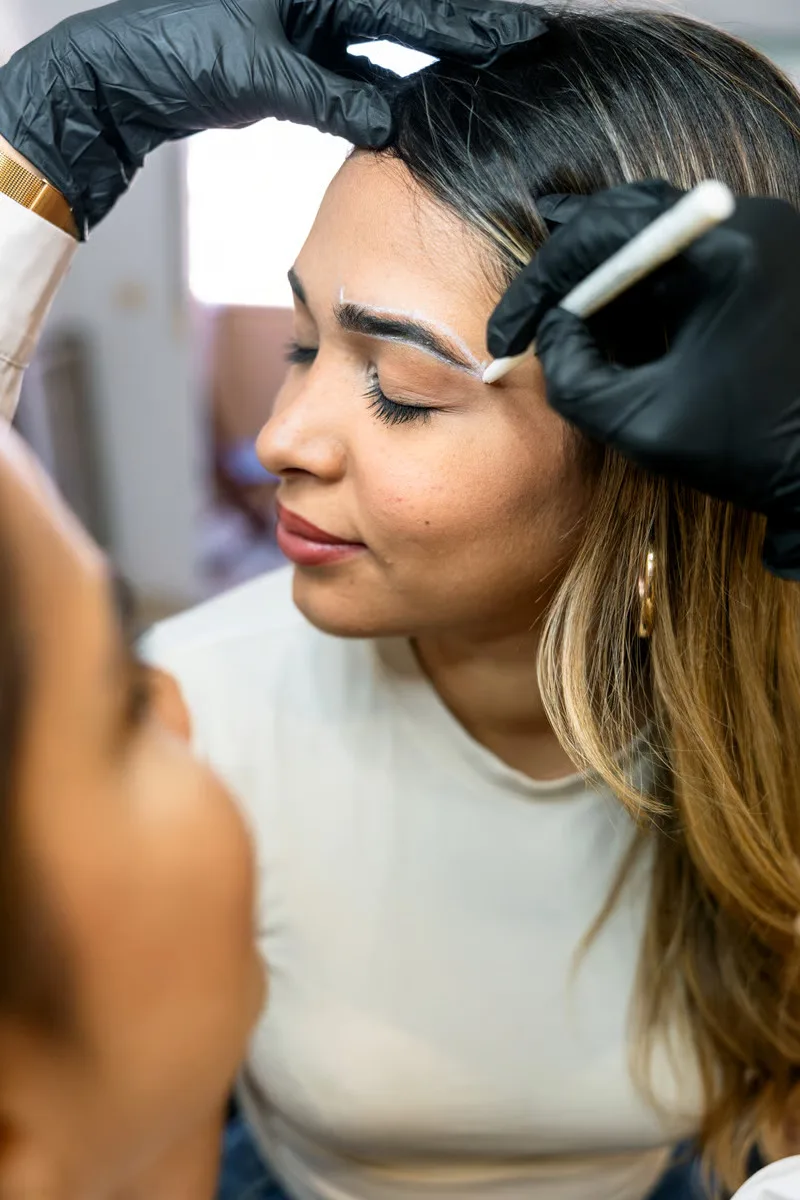
That is exactly the moment to go to a brow artist, who can pick the right shape for you specifically. At that point they see where and how thickly the hairs grow. If you live near Cranford or come over from Linden (see our Linden location page), that first visit is usually a mapping, not a removal.
Hands off inside the shape
To grow eyebrows back after over plucking, you have to stock up on patience and follow a few rules. The first one is to stop plucking completely. This gives the follicles a chance to recover and start growing new hairs.
How hairs are removed affects them a great deal. There are three main ways to shape brows: tweezers, wax and thread. Tweezers suit those with very dense, thick hairs. If the brows are soft and the hair outside the shape grows as light fuzz, wax or thread can be used. These methods take more hairs at once and do not miss even the finest ones. The only minus is a high chance of irritation.
Do
- Leave every hair inside the shape alone
- Remove only strays on the bridge of the nose
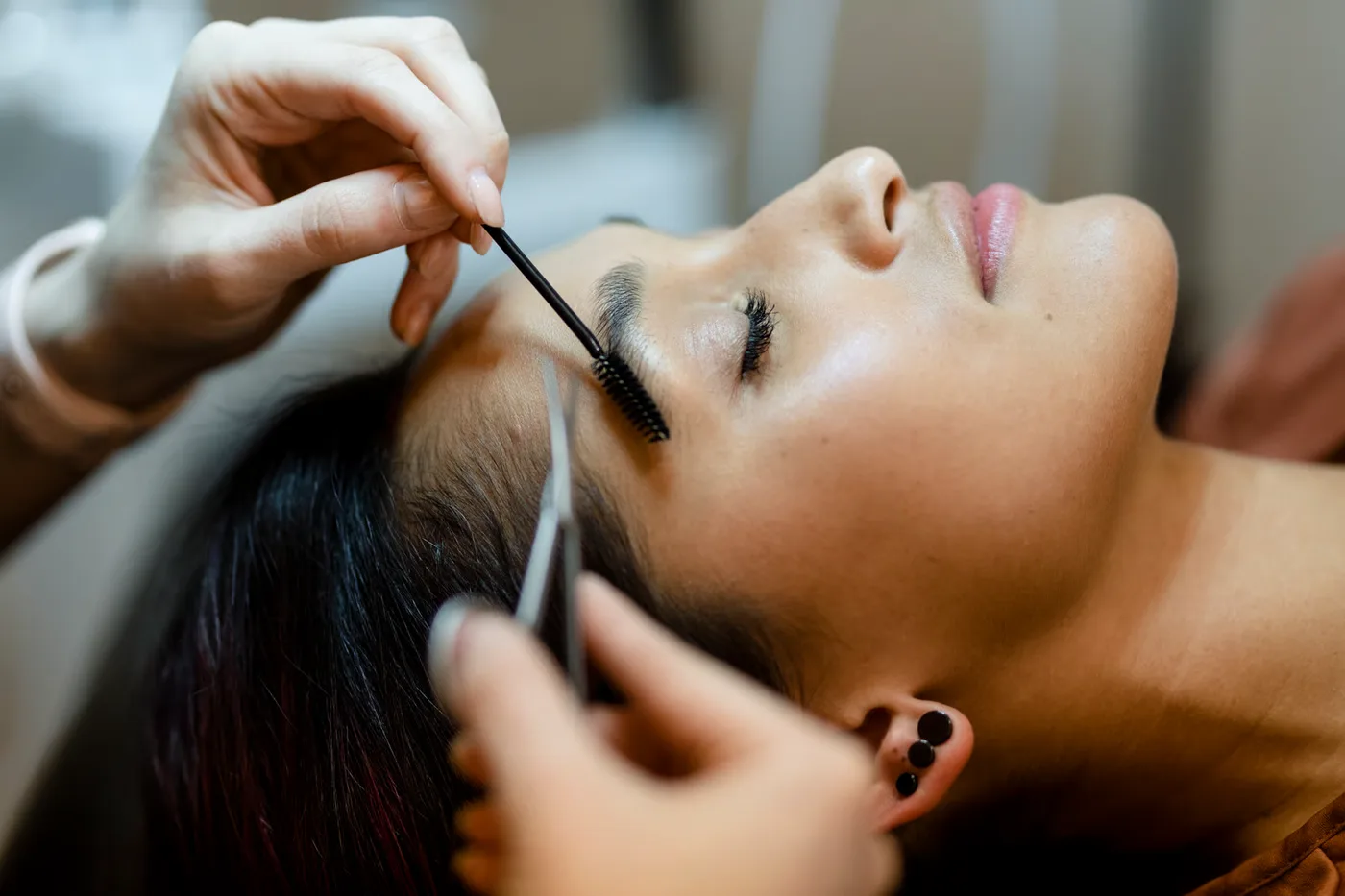
- Comb brows daily with a clean brush
- Clean cream and foundation off the brows
Don't
- Pluck "just one" hair inside the line
- Trim the brow hairs
- Leave night cream sitting on the brows
Keep the skin around the brows clean and moisturized, and comb the brows daily with a clean brush.
When you are ready for help, the studio approach is narrow on purpose: a custom brow ($45) maps the shape you are growing toward, and a Brow Tweeze ($35, 25 minutes) takes only the strays outside that mapped shape. Details are on our brow services page.
Filling gaps while you wait
The brows will grow, but what do you do while the hairs are only starting? The simplest and most accessible option is makeup. You can tint the brows, or draw new ones on bare skin, with a pencil or shadows. Those who doubt their talent as an artist will like stencils. Choose long-wearing products that do not wash off with water.
Brow makeup directly affects the condition of the brows. When choosing a setting gel, read the ingredients. So the gel does not dry the hairs out, it should not contain alcohol, or alcohol should be near the end of the list, which means there is very little of it.
| Option | How it behaves | Watch for |
|---|---|---|
| Medium-soft pencil | Draws hair-like strokes without heavy pressure | Pick medium, not too hard or too soft |
| Hard pencil | Lasts longer on the skin | Needs more force and pressure, which can tug at the hairs |
| Very soft pencil or powder | Fills fast, covers bare skin | Can smudge and weigh the hairs down |
Foundation and day or night cream often end up on the brows too, and they can clog the skin around the hairs. After applying your cream, take a cotton swab and remove what is left on the brows. Do the same when doing makeup. If foundation is kept off the brow area, shadows and pencil hold much better and go on more sheer, so the drawn brow looks more natural. For a hand with the drawing itself, see our makeup services; and if you need brows to stay put through a long evening, read our guide to event makeup that lasts.
There are in-between options too. Lamination holds 4-6 weeks and lays the longer hairs over thin spots; henna stains the skin between hairs. How those differ is a separate topic, covered in our post on lamination, henna or tint.
Oils, serums and shaving
There is a huge number of oils that are used to improve brows and help them grow. In practice, regular use of any oil - coconut, castor, jojoba, wheat germ and so on - is part of most home routines for growing out brows. The main thing is to put oil on a thoroughly cleaned brow area regularly and not overdo the amount. One small drop is enough, spread in a thin layer over the hairs and the skin where there are gaps. Otherwise there is a high chance of clogging the skin, which leads to irritation and breakouts.
Castor oil for eyebrow growth
Castor oil is known for its moisturizing and nourishing properties. It contains ricinoleic acid and antioxidants. It is applied to the brows before bed. As for frequency, follow the directions on the product. Jojoba is good for moisturizing and contains a high concentration of vitamin E. Rosemary oil is mixed a few drops at a time into a base oil (olive or almond), applied with massaging movements, left on for a while, and washed off with water. Keep it away from the eyes and try it on a small patch of skin first.
For serums, look for products with vitamins E and C, panthenol and biotin. Apply the serum to the brows as the label directs, with light massaging movements. Oil masks are left on for a while and washed off. None of this works fast, and none of it works the same for everyone.
Oils and serums are care, not a guarantee. They keep the hairs and skin in order while you wait; the waiting itself is what grows the brow.
Does shaving eyebrows affect growth?
Many people decide to shave their brows because they are unhappy with how thick they naturally are. Sometimes brows look untidy because the hairs are different lengths, and some people have gaps. The belief that shaved hair grows back faster and more evenly is common. In reality, this happens very rarely. It is important to understand that after shaving you will not grow more hair than there was before.
If the problem is that the brows have "gaps," look for another option - treatment or cosmetic correction. Brows will not grow faster or thicker after being shaved once. If you shave your brows off completely, they will, of course, grow back gradually, within a few weeks. Shaving can only change how the hairs feel: some people notice that facial hair becomes coarser after shaving.
Trimming while you grow brows out is not recommended either. The natural tip of a brow hair is usually lighter and finer. After a trim the tip is blunt, so the brow can look coarser while it grows out.
Brows that never come back
Some people are genetically prone to thin, sparse brows or to alopecia, which is hair loss. People with this problem need to see a doctor. A proper diagnosis and an individual treatment plan come from a doctor, not from a brow studio.
It is the most useful thing to know before you start. The number of hair follicles a person has is limited.
Healthy hair needs certain nutrients, and serious illnesses are treated with medication. If brows are falling out in patches, or nothing changes after a few months of leaving them alone, start with a doctor. The MedlinePlus hair loss page from the U.S. National Library of Medicine is a reasonable place to read about the causes first.
For everything else - shape, mapping, the in-between months - you can look through all studio services, read about the studio team, or send the studio a question.